
A treatment once reserved for men who had exhausted nearly every other option is now available earlier in the course of advanced prostate cancer — and the science behind it is increasingly impressive.
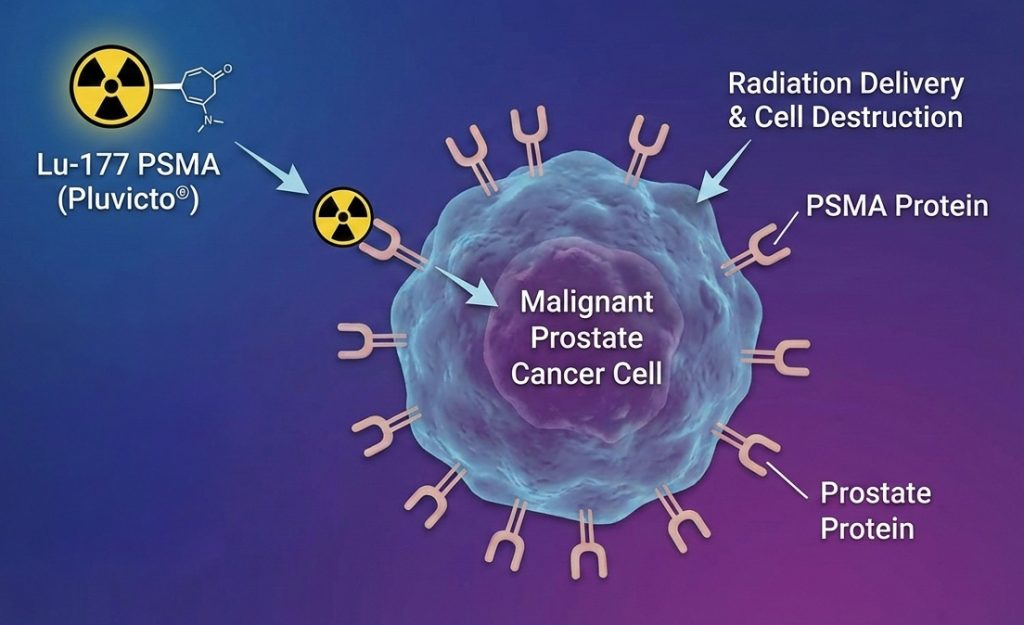
Lutetium-177 vipivotide tetraxetan, sold under the brand name Pluvicto, is a targeted radioligand therapy that works by attaching a radioactive molecule to PSMA, the same protein detected in PSMA PET scans. Once it binds to prostate cancer cells, it delivers a precise dose of radiation directly to the tumor, largely sparing surrounding healthy tissue. This “seek and destroy” approach is what researchers and patients have come to call “smart radiation.”
Pluvicto first received FDA approval in 2022 for patients with advanced castration-resistant prostate cancer who had already received both androgen receptor pathway inhibitor therapy and taxane-based chemotherapy — a late-stage population with few options remaining. In March 2025, the FDA significantly expanded that indication. Based on data from the Phase III PSMAfore trial, Pluvicto is now approved for use before chemotherapy, for patients who have progressed on androgen receptor pathway inhibitor therapy but for whom delaying chemotherapy is appropriate. The PSMAfore data showed that patients treated with Pluvicto had a median radiographic progression-free survival of 9.3 months, compared to just 5.6 months with a change in androgen receptor inhibitor therapy — a meaningful difference in a disease where every month counts.
More recently, trials have been exploring Pluvicto even earlier in the disease course — in hormone-sensitive prostate cancer, where it would be used in combination with standard androgen deprivation therapy (ADT) and androgen receptor pathway inhibitors. Early data from the ESMO Congress 2025 showed the combination significantly extended radiographic progression-free survival compared to standard treatment alone, and overall response rates approached 85%.
Access remains a challenge for some patients, as the treatment requires specialized nuclear medicine facilities and involves logistical and cost considerations. Clinicians and advocates are actively working to address those barriers so that more patients can benefit from this growing body of evidence.
These articles are intended for general informational purposes. Please consult a qualified healthcare provider for advice specific to your medical situation.