
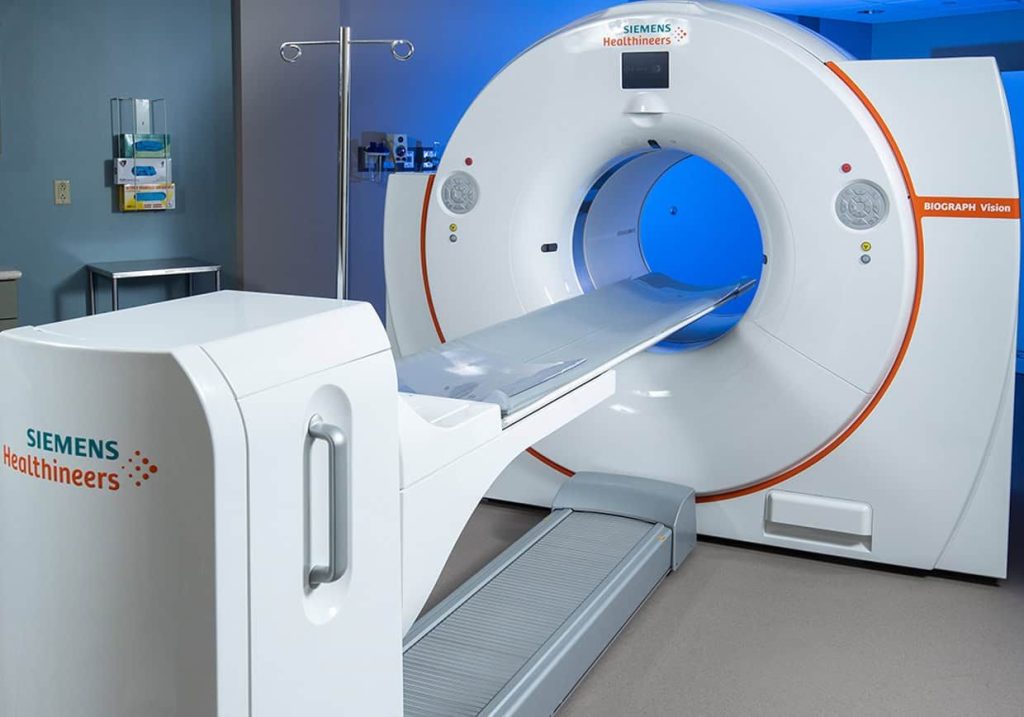
Prostate cancer research in 2026 has been defined by a single molecule: PSMA, or prostate-specific membrane antigen. This protein sits on the surface of prostate cancer cells in far greater numbers than on healthy tissue, and researchers have learned to exploit that difference in two ways — to see the cancer more clearly, and to deliver radiation directly to it. Together, these advances are reshaping how doctors diagnose, stage, and treat the disease.
A sharper picture before treatment even begins
For decades, deciding whether a man needed a prostate biopsy relied heavily on PSA blood tests and standard MRI, both of which can miss aggressive cancers or flag ones that never needed treatment. PSMA PET scans are changing that equation. This imaging technique tags PSMA-expressing cells with a radioactive tracer, then uses PET scanning to light up cancer wherever it appears in the body, often with far greater sensitivity than conventional imaging.
New trial data presented at the 2026 European Association of Urology meeting looked specifically at men whose MRI results were ambiguous or unsuspicious — a group that traditionally faces a difficult choice about whether a biopsy is worth the risk. The PRIMARY2 trial, a multi-center Phase III study, examined whether adding a PSMA PET/CT scan in this situation could help identify which of these men actually harbored significant cancer, potentially sparing others an unnecessary procedure. This approach reflects a broader shift in the field: using imaging not just to find cancer, but to find the right cancer to treat, while leaving low-risk disease under active surveillance.
PSMA PET is also proving useful earlier in staging. At the 2026 EAU meeting, six-year survival data from the STAMPEDE trial supported intensifying treatment — combining abiraterone, hormone therapy, and radiation — in men whose PSMA scans revealed cancer had already reached nearby lymph nodes, even when the primary tumor was still considered localized. Catching that spread with PSMA imaging, rather than missing it on conventional scans, changes the treatment plan from the outset.
Turning the same target into a treatment
The same PSMA protein that makes cancer visible on a scan can also serve as a docking station for treatment. Radioligand therapy — sometimes called “smart” radiation — attaches a cancer-killing radioactive isotope to a molecule that binds specifically to PSMA. Once injected, the compound travels through the bloodstream and concentrates in PSMA-rich tumor cells wherever they are in the body, delivering radiation directly to the cancer while largely sparing surrounding healthy tissue.
This approach, exemplified by the radioligand drug Pluvicto (lutetium-177 vipivotide tetraxetan), has already changed care for men with metastatic castration-resistant prostate cancer whose disease has progressed despite hormone therapy and chemotherapy. Research through 2025 and into 2026 has focused on two questions: whether radioligand therapy can be moved earlier in the treatment sequence, before chemotherapy, and whether combining it with other therapies — including PARP inhibitors as radiosensitizers — can improve outcomes further. Early combination studies, such as trials pairing PARP inhibition with radium-223 (a related alpha-emitting radioisotope), are testing whether disrupting cancer cells’ ability to repair radiation-induced DNA damage can make radioligand treatment even more effective.
Why this matters for patients
Taken together, PSMA-based imaging and therapy represent a shift toward true precision oncology in prostate cancer: identifying exactly where the disease is, how aggressive it looks, and then delivering treatment that follows the same molecular map. For patients, the practical implications include:
- More confidence in biopsy decisions — fewer unnecessary procedures for low-risk findings, better detection of dangerous ones.
- More accurate staging — treatment plans built on where cancer has actually spread, not just where it’s assumed to be.
- A treatment option for advanced disease with a different side-effect profile than chemotherapy, now being tested earlier in the disease course.
What’s still being worked out
None of this is settled science yet. Researchers are still determining which patients benefit most from moving radioligand therapy earlier, how to sequence it relative to chemotherapy and hormonal therapies, and how durable the survival benefits are compared to established treatments. Access and cost also remain real barriers, since PSMA PET scanning and radioligand therapy require specialized nuclear medicine facilities not available everywhere.
As always, patients should discuss with their care team whether PSMA imaging or radioligand therapy is appropriate for their specific stage and risk category — much of this research describes trends in ongoing trials rather than new standards of care for every patient.
This article summarizes recent research discussed at the 2026 EAU and PCF conferences and is intended for general information. It is not medical advice. Speak with a urologist or oncologist about your individual situation.