
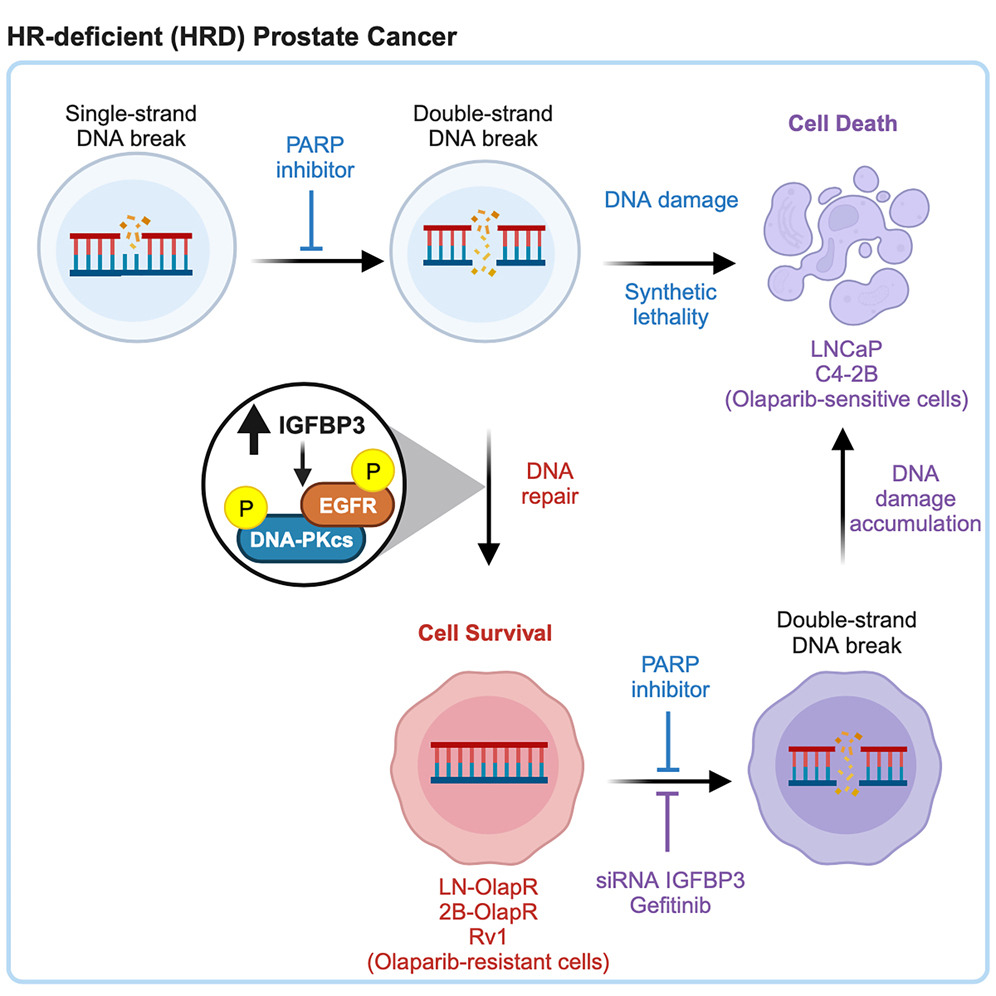
PARP inhibitors are among the most significant advances in precision medicine for prostate cancer. These drugs work by blocking DNA repair in cancer cells that already have defects in DNA-repair genes such as BRCA1, BRCA2, ATM, and other homologous recombination repair (HRR) genes.
1. Moving PARP Inhibitors Earlier in Treatment
Historically, PARP inhibitors were used after prostate cancer became resistant to hormone therapy. New research is evaluating their use much earlier in the disease course.
The Phase III AMPLITUDE trial showed that adding niraparib to standard hormone therapy significantly delayed cancer progression in men with metastatic castration-sensitive prostate cancer who had HRR gene alterations. This suggests PARP inhibitors may move into earlier lines of treatment for selected patients.
2. Combination Therapy is Becoming the Standard
Several landmark trials have demonstrated that combining PARP inhibitors with androgen receptor pathway inhibitors (ARPIs) can improve outcomes compared with hormone therapy alone:
- Olaparib + abiraterone (PROpel)
- Niraparib + abiraterone (MAGNITUDE)
- Talazoparib + enzalutamide (TALAPRO-2)
These combinations have shown improvements in progression-free survival, particularly in patients with BRCA1/2 mutations.
3. Genetic Testing is More Important Than Ever
One of the clearest findings from recent studies is that not all genetic mutations respond equally.
Researchers consistently report that the greatest benefit occurs in men with BRCA2 mutations, followed by BRCA1. Benefits appear more limited in patients with ATM mutations and some other HRR alterations. This has increased the importance of both germline and tumour genetic testing.
4. New PARP Inhibitors Are in Development
Researchers are testing next-generation PARP inhibitors designed to be more selective and potentially cause fewer side effects.
One example is saruparib (AZD5305), currently being studied in high-risk localized prostate cancer with BRCA mutations. Researchers hope these newer agents may maintain effectiveness while reducing bone marrow toxicity.
5. Overcoming Resistance
A major challenge is that cancers can eventually become resistant to PARP inhibitors.
New laboratory studies are investigating combinations of PARP inhibitors with drugs targeting the ATR-CHK1 pathway, which may help overcome resistance mechanisms and restore treatment sensitivity.
6. Future Directions
Current research is exploring:
- PARP inhibitors combined with PSMA-targeted therapies.
- PARP inhibitors combined with radiopharmaceuticals.
- Better biomarkers to identify which patients will benefit.
- Optimal sequencing of PARP inhibitors with chemotherapy and PSMA radioligand therapy.
Key Takeaway for Patients
PARP inhibitors are helping drive a shift toward personalized prostate cancer treatment. The strongest benefits are currently seen in men whose cancers carry BRCA1 or BRCA2 mutations, and research is rapidly moving these therapies earlier in the disease course. For men with advanced prostate cancer, genetic testing is becoming an essential part of determining whether PARP inhibitors may be an effective treatment option.
These articles are intended for general informational purposes. Please consult a qualified healthcare provider for advice specific to your medical situation.